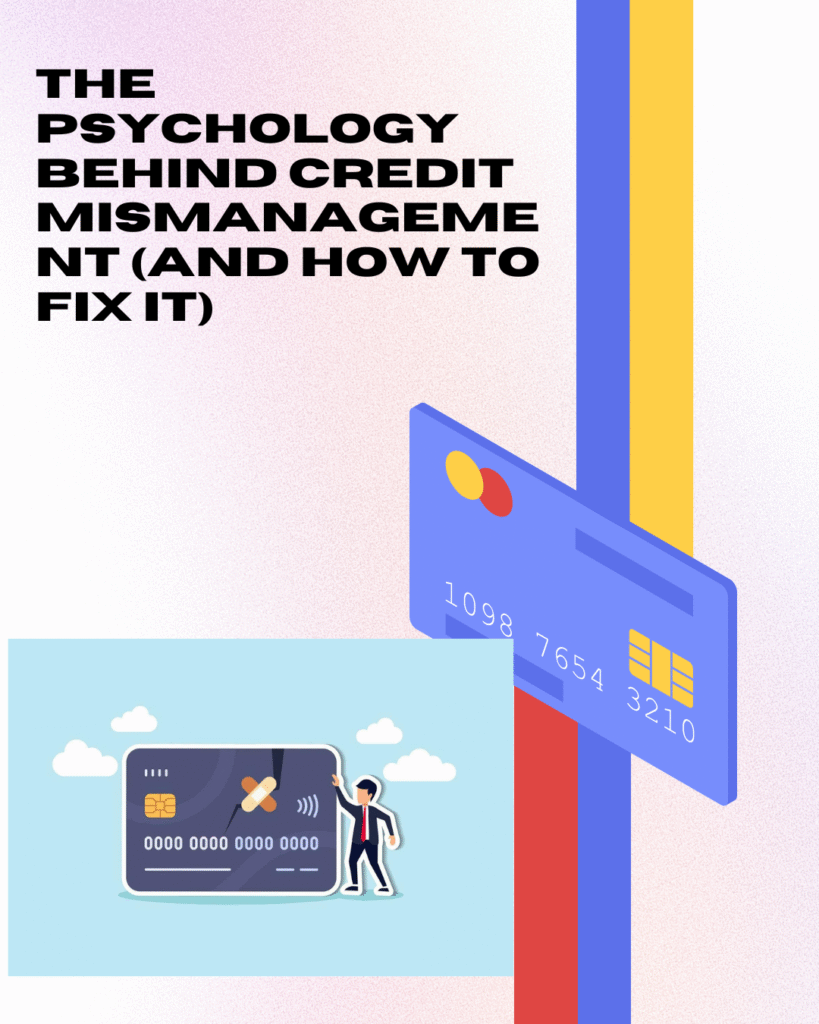
Credit problems are often treated as purely financial issues—late payments, high balances, or loan defaults. But beneath these surface-level problems lies something deeper: human psychology. The way people think, feel, and behave around money plays a major role in how they use credit.
Understanding the psychological triggers behind credit mismanagement is the first step toward fixing it permanently. Without addressing these root causes, even the best financial advice can fail. Let’s explore why people misuse credit and how to break the cycle.
Why Credit Mismanagement Is Not Just About Money
Most people don’t wake up planning to damage their credit score. Mismanagement usually develops gradually due to habits, emotions, and decision-making patterns.
Common underlying reasons include:
- Emotional spending
- Lack of financial awareness
- Social pressure
- Short-term thinking
- Overconfidence in repayment ability
Credit cards and easy loans make it even easier to act on impulse, often without fully considering long-term consequences.
1. Instant Gratification: The Biggest Culprit
One of the strongest psychological drivers behind poor credit behavior is instant gratification—the desire to have something now rather than later.
Credit enables this mindset:
- You can buy without having money immediately
- Payments are delayed, reducing the “pain” of spending
- Rewards and offers encourage more usage
This creates a dangerous loop where spending feels easy, but repayment becomes stressful later.
How to Fix It:
Train yourself to pause before making purchases. A simple rule is the “24-hour rule”—wait a day before buying non-essential items. This reduces impulsive decisions and builds control.
2. Emotional Spending: Using Credit as a Coping Mechanism
Many people use spending as a way to deal with emotions such as:
- Stress
- Anxiety
- Loneliness
- Boredom
Buying something new can create a temporary sense of happiness or relief. However, this relief is short-lived, while the debt remains.
Over time, this pattern leads to:
- Increasing credit balances
- Difficulty managing repayments
- Guilt and financial anxiety
How to Fix It:
Identify emotional triggers and replace spending with healthier alternatives like exercise, hobbies, or talking to someone. Awareness is the first step to breaking the cycle.
3. “Minimum Payment” Illusion
Credit cards often allow you to pay a small minimum amount instead of the full bill. Psychologically, this creates a false sense of control.
People think:
- “I’ve paid something, so I’m fine”
- “I’ll clear the rest later”
But in reality:
- Interest keeps accumulating
- Debt grows silently
- Repayment becomes harder over time
How to Fix It:
Always aim to pay the full amount due. If that’s not possible, reduce spending immediately and create a plan to clear the balance as quickly as possible.
4. Social Comparison and Lifestyle Pressure
In today’s world, especially with social media, people constantly compare themselves to others. Seeing friends or influencers spending on:
- Gadgets
- Travel
- Luxury items
can create pressure to maintain a similar lifestyle—even if it’s not financially sustainable.
Credit becomes a tool to “keep up,” leading to unnecessary debt.
How to Fix It:
Focus on your own financial goals instead of external comparisons. Remember, many people showcasing luxury lifestyles may also be managing debt behind the scenes.
5. Overconfidence in Future Income
Another common psychological trap is assuming that future income will easily cover current spending.
People often think:
- “I’ll earn more next month”
- “A bonus will cover this”
- “I’ll manage somehow”
While optimism is good, overconfidence can lead to overspending and poor planning.
How to Fix It:
Base your spending on your current income, not future expectations. Treat uncertain income (bonuses, incentives) as extra—not guaranteed.
6. Lack of Financial Awareness
Many individuals simply don’t fully understand how credit works:
- Interest rates
- Billing cycles
- Credit utilization
- Impact of late payments
Without this knowledge, it’s easy to make decisions that harm your credit score unintentionally.
How to Fix It:
Educate yourself on basic financial concepts. Even a small understanding can significantly improve your decision-making.
7. Avoidance Behavior
When people feel overwhelmed by debt, they often avoid dealing with it altogether. This includes:
- Ignoring bills
- Not checking account balances
- Avoiding calls from lenders
This avoidance only worsens the situation, leading to penalties, higher interest, and long-term damage.
How to Fix It:
Face the problem directly. Break it into smaller steps:
- List all debts
- Prioritize repayments
- Communicate with lenders if needed
Taking action reduces anxiety and gives you control.
Building Better Financial Habits
Fixing credit mismanagement is not about one big change—it’s about consistent small habits.
Here are some key practices:
1. Create a Simple Budget
Track your income and expenses. Knowing where your money goes helps you control it.
2. Use Credit with Purpose
Don’t use credit for unnecessary purchases. Treat it as a tool, not extra income.
3. Set Payment Reminders or Auto-Pay
Consistency is critical. Never miss due dates.
4. Keep Credit Utilization Low
Try to use less than 30% of your credit limit.
5. Review Your Financial Behavior Monthly
Regular check-ins help you stay on track and make adjustments.
Changing Your Mindset About Credit
The biggest transformation happens when you shift how you view credit:
- From “extra money” → to “borrowed responsibility”
- From “instant access” → to “planned usage”
- From “short-term benefit” → to “long-term impact”
When you start seeing credit as a tool that requires discipline, your behavior naturally improves.
How Long Does It Take to Fix Credit Behavior?
Behavioral change doesn’t happen overnight. It may take:
- A few weeks to break impulsive habits
- A few months to build consistent discipline
- Longer to fully transform your financial mindset
The key is persistence. Even small improvements create long-term results.
Final Thoughts
Credit mismanagement is rarely just about numbers—it’s about behavior, emotions, and mindset. By understanding the psychological factors behind your financial decisions, you can address the root cause instead of just the symptoms.
Fixing your credit is not only about paying off debt; it’s about becoming more aware, disciplined, and intentional with your money. Once you gain control over your habits, your credit score will naturally follow.