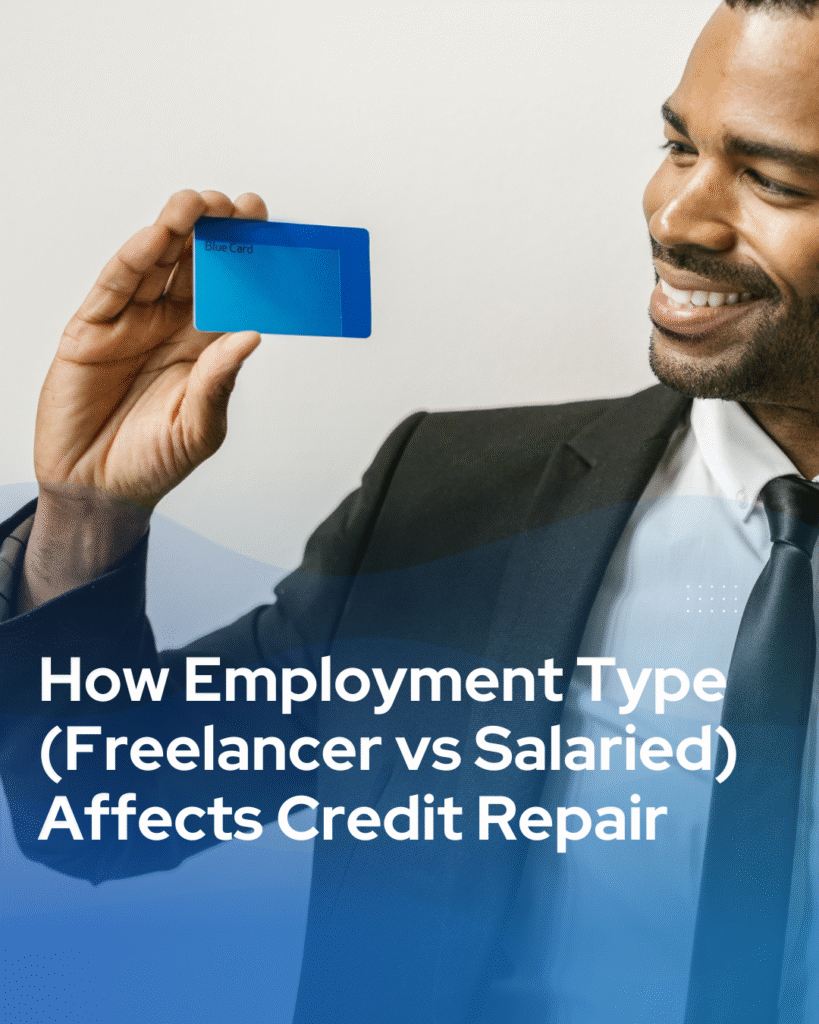
When it comes to credit repair, most people focus on repayment strategies, reducing debt, and improving their credit score. While these factors are important, one crucial aspect that often gets overlooked is employment type. Whether you are a salaried employee or a freelancer can significantly influence how lenders perceive your financial reliability—and ultimately, how easy or difficult it is to repair your credit.
Understanding these differences can help you adopt the right strategies and improve your chances of rebuilding a strong credit profile.
Why Employment Type Matters in Credit Repair
Lenders don’t just evaluate your credit score—they assess your overall financial stability. Your employment type gives them insight into:
- Income consistency
- Repayment capacity
- Financial risk level
Even if two individuals have the same credit score, a lender may treat them differently based on whether they are salaried or self-employed.
Salaried Individuals: Stability as an Advantage
Salaried employees are generally seen as low-risk borrowers. This is because they have:
- Fixed monthly income
- Regular salary credits
- Employer verification
- Predictable financial patterns
These factors make it easier for lenders to trust that repayments will be made on time.
How It Helps in Credit Repair
If you are a salaried individual trying to repair your credit:
- Lenders may be more willing to approve loans or credit cards
- You may receive better interest rates
- You can rebuild your credit faster with consistent repayments
For example, even if your credit score is low, a stable job with regular income can strengthen your application.
Challenges for Salaried Individuals
While salaried individuals have advantages, they are not immune to credit problems. Common issues include:
- Over-reliance on credit cards
- Lifestyle inflation (spending more as income increases)
- Ignoring small debts
However, these issues are easier to fix due to predictable income flow.
Freelancers and Self-Employed Individuals: Flexibility with Complexity
Freelancers, gig workers, and self-employed individuals face a different reality. Their income is often:
- Irregular
- Seasonal
- Dependent on clients or projects
From a lender’s perspective, this creates uncertainty.
Why Lenders See Freelancers as Higher Risk
Even if a freelancer earns more than a salaried person, lenders may hesitate because:
- Income is not guaranteed every month
- Documentation may be inconsistent
- Cash flow can fluctuate
This doesn’t mean freelancers are financially unstable—it simply means their income is harder to predict.
Impact on Credit Repair for Freelancers
If you’re a freelancer working on credit repair, you may face:
- Higher chances of loan rejection
- Lower credit limits
- Higher interest rates
- More scrutiny during application
This can slow down the credit repair process compared to salaried individuals.
Key Differences: Freelancer vs Salaried in Credit Repair
| Factor | Salaried | Freelancer |
|---|---|---|
| Income Stability | High | Variable |
| Loan Approval Chances | Higher | Lower |
| Documentation | Simple (salary slips) | Complex (ITR, bank statements) |
| Credit Repair Speed | Faster | Slower |
| Risk Perception | Low | Moderate to High |
How Salaried Individuals Can Repair Credit Faster
If you are salaried, you can use your stability to your advantage:
1. Leverage Salary Proof
Provide salary slips and bank statements to strengthen your credit applications.
2. Automate Payments
Set up auto-debit for EMIs and credit card bills to avoid missing due dates.
3. Use Employer Benefits
Some companies offer salary advances or financial programs that can reduce dependency on high-interest credit.
4. Maintain Consistency
Regular income allows you to follow a structured repayment plan, which improves your credit score over time.
How Freelancers Can Overcome Credit Challenges
Freelancers may face more hurdles, but with the right approach, they can build strong credit profiles.
1. Maintain Proper Income Documentation
Keep records such as:
- Income Tax Returns (ITR)
- Bank statements
- Client invoices
This helps prove your earning capacity to lenders.
2. Show Consistent Cash Flow
Even if income varies, try to:
- Maintain a steady average balance
- Avoid large gaps in income
- Deposit earnings regularly into your account
Consistency, even in variability, builds trust.
3. Start Small and Build Gradually
Instead of applying for large loans:
- Begin with secured credit cards
- Take small loans and repay on time
- Build a repayment history step by step
4. Keep a Financial Buffer
Since income is unpredictable, maintaining an emergency fund is essential. This ensures you can:
- Pay EMIs on time
- Avoid missed payments during low-income periods
5. Separate Personal and Business Finances
Mixing finances can create confusion and make your profile look unstable. Use:
- Separate bank accounts
- Clear transaction records
This improves financial transparency.
Common Mistakes to Avoid
Regardless of employment type, certain mistakes can harm your credit repair efforts:
- Missing payments due to poor planning
- Applying for multiple loans at once
- Ignoring credit utilization limits
- Not monitoring your credit report
Freelancers should especially avoid irregular financial records, while salaried individuals should avoid overconfidence in steady income.
The Role of Financial Discipline
At the end of the day, employment type influences perception—but financial discipline determines results.
Both salaried individuals and freelancers can achieve excellent credit scores if they:
- Pay on time
- Use credit responsibly
- Plan expenses carefully
- Stay consistent
Lenders may initially favor salaried applicants, but strong financial behavior can outweigh employment differences over time.
How Long Does Credit Repair Take?
The timeline for credit repair depends more on behavior than employment type, but generally:
- Salaried individuals may see faster improvement due to stable income
- Freelancers may take slightly longer due to variability
On average, noticeable improvement can take 3 to 6 months, while strong credit profiles may take 6 to 12 months or more.
Final Thoughts
Your employment type does not define your financial future—it simply shapes your starting point. Salaried individuals benefit from stability, while freelancers bring flexibility and earning potential. Both paths have their own challenges and advantages.
The key to successful credit repair lies in understanding how lenders view your income and adapting your strategy accordingly. By building consistent habits, maintaining transparency, and managing your finances wisely, you can overcome any limitations and create a strong, reliable credit profile.